Infinite Word Search Puzzles
Random Logic Games, LLCWord
4.711.71K Reviews
- Version
- 5.1.18
- Installs
- 10.00M
- Age Rating
- Everyone
Screenshots




Our Review of Infinite Word Search Puzzles
 Analysis by Appyee
Infinite Word Search Puzzles is the kind of word game I can open without preparation and understand within seconds. I choose a puzzle, scan the letter grid, and start looking for hidden words. That simplicity is its greatest strength, but it also means the quality of the experience depends on presentation, pacing, and how well the game keeps a familiar idea from becoming tiring. After spending time with it, I see it as a relaxed, highly accessible word-search game rather than a dramatic challenge-driven adventure.
Developed by Random Logic Games, LLC, this free title has built a substantial audience, with a 4.7 average from around 80 thousand ratings and over 10 million installs. Those figures make sense to me: it is easy to pick up, suitable for Everyone, and broad enough to appeal to children, casual players, and adults who want a quiet mental break. The current version is 5.1.18, and the game runs on devices using OS 8.1 or later. I would still approach it with the right expectations. This is not a word game built around a story, characters, or a changing fantasy world. Its appeal comes from the calm ritual of searching, finding, and moving on.
A calm word-search world built from visual clarity
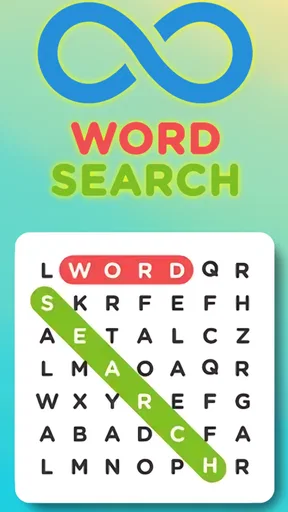
I find the game’s clearest appeal in how little ceremony stands between me and a puzzle: the letters are the focus, and the category gives each search a useful starting mood. That simplicity makes it easy to fit into a short pause, but it also sets expectations—the enjoyment comes from careful looking, not from a stream of surprises. Next, I’ll look at how choosing a theme can make that familiar routine feel more purposeful.
My first impression: immediate play with very little friction
The opening experience is refreshingly direct. The game does not ask me to learn a complicated rule set before I can enjoy it. A word list and a field of letters communicate the objective naturally, so even someone who rarely plays mobile games can begin confidently. That makes it useful in situations where I have only a few minutes, such as waiting for an appointment, taking a short break from work, or winding down before bed.
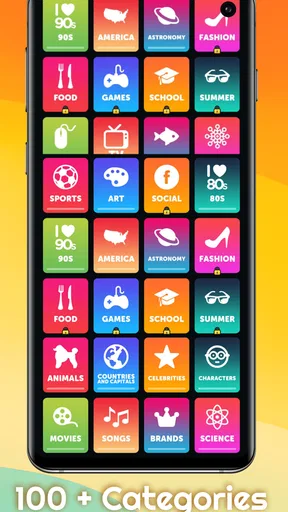
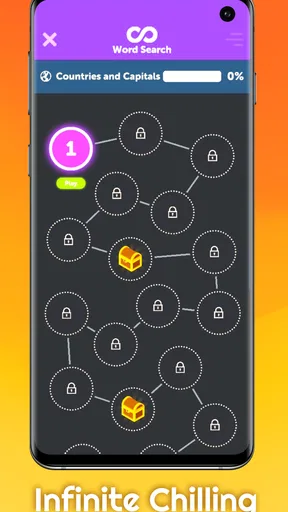
The large collection is one of the main reasons the game remains practical over time. Instead of treating word search as a small side activity, it presents a long-running supply of puzzles organized across more than 300 categories. That organization gives the experience a sense of direction. I am not simply staring at an endless sequence of anonymous grids; I can use a theme to create a little context for the next session.
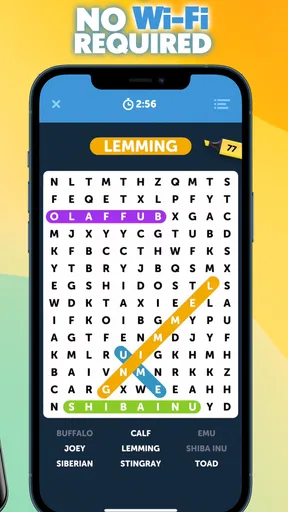
The visual language is functional rather than showy. Letters need to remain readable, and the puzzle must make selected words easy to recognize without turning the screen into visual clutter. In my experience, that restraint suits the genre. A word search is already a concentration exercise, so excessive decoration would work against the central activity. The game’s identity comes from the arrangement of letters and the satisfaction of marking a discovery, not from elaborate scenery.
That also explains one of its limitations. Players who expect a richly illustrated setting may find the presentation plain. The categories provide variety in subject matter, but they do not transform the game into a series of fully realized worlds. I think of them more as changes in mental framing: a new topic changes what I expect to see in the word list, while the basic visual environment keeps the experience consistent.
How categories shape the mood
The category system does more than provide vocabulary. It affects the mood of each session because the theme determines whether I approach the puzzle with curiosity, familiarity, or a desire to test myself. A category connected to an everyday subject feels approachable, while a less familiar topic can make the search slower and more educational. That difference is useful when choosing a puzzle for a particular moment.
For a short break, I prefer a theme I already understand. Familiar words let me focus on scanning patterns rather than recalling terminology. When I want a more attentive session, I choose a subject that forces me to inspect the list carefully. This is a small but valuable workflow: the category can act as a difficulty preference even when I am not deliberately looking for a harder mode.
Parents may also find that the age rating of Everyone makes the game a comfortable choice for shared casual play. I would not present it as a formal learning tool, because its primary purpose is entertainment, but it can encourage spelling recognition and visual attention. A child can search independently, while an adult can turn the category into a conversation starter instead of simply watching the screen.
For older players, the uncluttered structure may be more important than novelty. There are no complicated controls to remember, and the core task is familiar. I can imagine using it as a gentle activity during a quiet afternoon, especially when a fast action game would feel too demanding. The trade-off is that players seeking constant surprise may eventually notice how stable the format remains.
Sound and rhythm: the quiet side of mobile gaming
Word search is naturally a low-noise genre, and that works in this game’s favor. The rhythm comes from my own attention: scan a row, follow a diagonal, confirm a word, then return to the remaining letters. Because the activity is built around concentration, a restrained audio approach feels more appropriate than an aggressive soundtrack or constant visual effects.
I usually think of this as a game I can fit around my surroundings rather than one that demands control of the room. It suits a commute, a waiting area, or a quiet evening because the experience does not depend on a cinematic atmosphere. The screen supplies the focus, while the real world can remain present in the background.
That calm rhythm is not the same as a lack of pacing. A good session has a natural rise and fall. At the beginning, I can find obvious words quickly. Later, the remaining targets require slower scanning and more deliberate movement. The game becomes almost meditative when I stop trying to rush the grid. I enjoy that transition because it turns a basic puzzle into a small exercise in patience.
There is a practical downside to this design. If I am tired or distracted, the slow rhythm can feel less like relaxation and more like repetition. Players who need energetic feedback, dramatic goals, or a strong soundtrack may prefer a more animated word game. This one is best when I want the search itself to occupy my attention, not when I need the app to entertain me through spectacle.
The mechanics fit the atmosphere
The central mechanic is well matched to the game’s quiet presentation. Searching through a letter grid asks for visual tracking, pattern recognition, and a little persistence. The controls do not need to compete with those skills. I can concentrate on the direction of a word and the shape it makes across the board instead of managing a complicated interface.
One useful habit is to avoid reading the grid as a wall of random letters. I start with the word list, pick a distinctive letter combination, and scan for likely starting points. After finding one word, I use the remaining list to guide my eyes toward less obvious patterns. This approach makes the experience feel more active and reduces the frustration of searching without a plan.
I also recommend changing how I scan when I get stuck. Looking only from left to right is inefficient, so I check vertical and diagonal paths, then search from the opposite direction. The benefit is not a hidden shortcut; it is a better mental routine. The game rewards players who vary their visual approach instead of repeatedly examining the same lines.
Another small trade-off is the balance between speed and accuracy. I can rush through obvious words, but hurried gestures may make a session feel messy, especially when several letters are close together. A slower, more controlled selection method is usually better for difficult entries. That is where the game’s relaxed atmosphere helps: it encourages me to treat a puzzle as a process rather than a race.
The large number of categories also changes how the mechanics feel over time. The basic search does not become a different genre, but the vocabulary keeps the task from being entirely interchangeable. I notice this most when moving between a familiar category and one with less predictable words. The underlying grid remains recognizable, yet the mental work changes enough to refresh the session.
Where it fits beside other word-game choices
Compared with crossword games, this is less dependent on interpreting clues or producing answers from memory. That makes it more accessible when I want a low-pressure activity. Crosswords are often better for players who enjoy language nuance and deduction; this game is better for people who prefer visual discovery and a clear goal.
Compared with anagram games, it also asks for less word construction. I am not rearranging tiles or racing to form a word from a limited set of letters. The challenge is locating the answer in a crowded field. That distinction matters when choosing a game for my mood. If I want to exercise spelling recall, an anagram title may be more satisfying. If I want to settle into a visual hunt, this one is the stronger fit.
It is also more relaxed than timed word games. Without making speed the entire point, it leaves room for casual play and shared sessions. The downside is that players who thrive on leaderboards, pressure, or competitive scoring may find the experience insufficiently intense. I would choose it for focus and decompression, not for a burst of adrenaline.
The free price makes trying it easy, but in-app purchases range from $0.99 to $49.99 per item. I would keep that in mind before treating the game as a completely cost-free long-term hobby. The sensible approach is to begin with the available free experience, decide whether the regular puzzle loop holds my interest, and only then consider spending. The purchase range is a reminder to review any transaction carefully, particularly on a shared device.
Everyday use: a small routine that works
A realistic session for me would be ten or fifteen quiet minutes after lunch. I open the game, choose a category that matches my energy, and start with the shortest or most visually distinctive word. I do not try to clear the grid as quickly as possible. Instead, I use the first few discoveries to learn how the letters are arranged, then slow down when the remaining list becomes less obvious.
That routine is especially useful when I need a break that is more engaging than scrolling but less demanding than a full game. The search gives my eyes and mind one defined task. When I finish, I can put the phone away without feeling pulled into a larger story, inventory system, or continuing event. For me, that limited commitment is a genuine advantage.
It can also work as a shared activity. Two people can look at the same puzzle and call out possible locations, although the game is still fundamentally designed around individual interaction. I would use it with a child to practice careful observation or with a friend who enjoys wordplay but does not want a competitive challenge.
On the other hand, I would skip it when I am looking for a long-form progression system. The categories provide breadth, but the experience does not replace a narrative adventure or a strategy game with evolving decisions. I would also skip it if repetitive visual searching causes eye strain or boredom. The familiar format is comforting for some players and limiting for others.
Practical expectations before installing
The game is free to download and carries an Everyone age rating, so it is positioned as an approachable choice for a broad audience. Device compatibility starts with OS 8.1, which is helpful for people using older supported hardware. I would still make sure the phone has enough comfortable screen space for reading and selecting letters; a small display can make dense grids less pleasant even when the software itself is easy to understand.
Because the game’s value comes from repeated short sessions, I would judge it by a simple question: do I enjoy searching when there is no story pushing me forward? If the answer is yes, the category variety can keep the routine useful for a long time. If the answer is no, the number of puzzles will not solve the underlying problem. Quantity helps a strong core loop, but it cannot replace a preference for the genre.
I also recommend treating the purchase options as optional rather than necessary to the decision. The free entry point lets me test the visual style, pacing, and basic controls without committing money. If I dislike the calm rhythm after a few sessions, paying for additional content would not change that judgment. If I enjoy the routine, I can decide later whether extra spending is worthwhile.
Final atmosphere verdict
Infinite Word Search Puzzles succeeds because its mechanics, visual language, and pacing point in the same direction. The letter grids create the setting, the category themes provide gentle variation, and the unhurried search produces a coherent mood. Nothing about it tries to turn a simple word hunt into something louder than it needs to be.
My strongest recommendation is for casual players who want a dependable, low-pressure word game with a large range of subjects. It is also a good choice for families, older players, and anyone who enjoys short sessions built around visual attention. The app is less suitable for people who need story, competition, elaborate art direction, or constant mechanical change.
For me, the best way to play is to choose categories intentionally, vary my scanning technique, and resist turning every puzzle into a speed test. That approach brings out the game’s real strength: it gives a familiar activity enough structure and variety to become a pleasant daily habit. If you want a quiet word-search companion rather than a high-energy challenge, this is an easy game to recommend.
Verdict
Strengths of Infinite Word Search Puzzles
- Thousands of themed puzzles provide plenty of replay value.
- Simple controls make it comfortable to play on phones and tablets.
- Offline play is useful when traveling or without a stable connection.
- Adjustable difficulty suits both casual players and word-search fans.
- Short rounds make it easy to enjoy during quick breaks.
Limitations of Infinite Word Search Puzzles
- Some puzzles may feel repetitive after extended play sessions.
- Hints and extra features can be limited without watching advertisements.
- The large number of ads may interrupt the flow for some players.
- Players seeking competitive multiplayer features may find it too basic.
- Small text or dense grids can be challenging on compact screens.
Other Releases by Random Logic Games, LLC
View All
Trivia Night
Trivia4.5

Words of the World
Word4.6
Similar Picks in This Category
View All
Word Search - Word Puzzle Game
Bluetile4.8

Word Search Quest - Puzzles
Blackout Lab4.8

CodyCross: Crossword Puzzles
Fanatee, Inc.4.7

Words of Wonders: Crossword
Fugo Games4.9

Wordscapes: Word puzzle game
PeopleFun4.7

Word Search Explorer
PlaySimple Games4.9
Frequently Asked Questions
What is Infinite Word Search Puzzles?
Infinite Word Search Puzzles is a word-finding game for Android and iOS that offers a large supply of puzzles to solve. Each puzzle presents a grid filled with letters, and your goal is to locate the hidden words listed on the screen. Words may appear horizontally, vertically, diagonally, and sometimes in reverse, making the game suitable for both casual play and more challenging sessions.
Is Infinite Word Search Puzzles free to download and play?
The game can generally be downloaded and played for free, allowing users to access its core word-search experience without an upfront purchase. However, free gameplay may include advertising, optional in-app purchases, or paid features depending on the version and platform. Before downloading, it is worth checking the store listing for current pricing, available purchase options, and whether advertisements can be removed.
Does the game work without an internet connection?
Infinite Word Search Puzzles is well suited to offline play because the main activity involves solving self-contained word grids. In many cases, previously available puzzles can be played without an active internet connection, which is useful during travel or when mobile data is limited. Internet access may still be required for advertisements, analytics, updates, cloud features, or certain optional content.
What difficulty levels and puzzle categories are available?
The game typically provides a variety of themes, word lists, and difficulty settings so players can choose an experience that matches their skill level. Easier puzzles usually contain shorter words and less crowded grids, while harder challenges may use larger boards, longer vocabulary, and more difficult word directions. The available categories and progression options can vary between app versions.
Is Infinite Word Search Puzzles suitable for children and beginners?
Yes, the straightforward controls and familiar word-search format make Infinite Word Search Puzzles accessible to beginners, casual players, and children who enjoy vocabulary games. It can also support concentration, spelling recognition, and visual scanning practice. Parents should nevertheless review the app’s advertisements, privacy details, and in-app purchase settings, especially if children will use the game without supervision.
Play our best games!


